


Knowledge Hub

50 years world heritage Convention: Shared Responsibility – Conflict & Reconciliation
2022
Author(s): Albert MT, Bernecker R, Cave C, Prodan AC, Ripp M
This book identifies various forms of heritage destruction and analyses their causes. It proposes strategies for avoiding and solving conflicts, based on integrating heritage into the 2030 Agenda for Sustainable Development.

Indigenous Data Sovereignty and Policy
2022
Author(s): Walter M, Kukutai T, Carroll S R, Rodriguez-Lonebear D
This book examines how Indigenous Peoples around the world are demanding greater data sovereignty, and challenging the ways in which governments have historically used Indigenous data to develop policies and programs.

Mountain Women of the World – Challenges, Resilience and Collective Power
2022
Author(s): Food and Agriculture Organization of the United Nations
This publication highlights the stories and voices of mountain women, with a focus on rural areas and mountain tourism, and outlines a path forward to promote their empowerment and help them to realize their potential as agents of sustainable mountain development. It includes on-the-ground interviews with mountain women in eight countries (Argentina, Bolivia, Chile, Italy, Kenya, Kyrgyzstan, Nepal and the United Republic of Tanzania) and the results of a global survey.

Biodiversity-Health-Sustainability Nexus in Socio-Ecological Production Landscapes and Seascapes (SEPLS)
2022
Author(s): Nishi M, Subramanian SM, Gupta H
This is an open access book. It is a compilation of case studies that provide useful knowledge and lessons that derive from on-the-ground activities and contribute to policy recommendations, focusing on the interlinkages between biodiversity and multiple dimensions of health (e.g., physical, mental, and spiritual) in managing socio-ecological production landscapes and seascapes (SEPLS).

From Traditional to Modern African Water Management Lessons for the Future
2022
Author(s): Kowenje C, Haarstrick A, Biswick T, Ajeagah G, Ojwach S, Odeku O A, Baba G
This book preserves and scientifically interprets the African foreknowledge on water resources management. It offers insight into the relevance of the traditional knowledge and practices to modern approaches on sustainable water management. The African continent has partially preserved its natural habitat for centuries.

The various cases presented in the book provides much-needed insights into the particular issues faced by Indigenous peoples in preserving their water resources, as well as actionable information that can inform future scientific research and policymaking aimed at developing more integrated, region-specific, and culturally relevant solutions to these critical challenges.
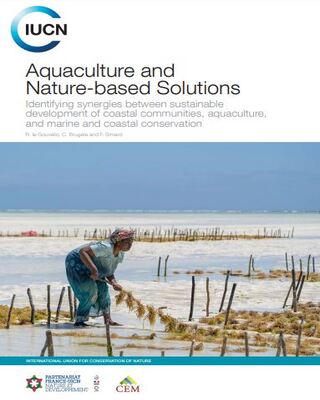
Aquaculture and nature-based solutions: identifying synergies between sustainable development of coastal communities, aquaculture, and marine and coastal conservation
2022
Author(s): Gouvello R, Brugere C, Simard F
The present report examines the emerging concept of Nature-based Solutions (NbS) and the IUCN Global Standard (IUCN, 2020a) when applied to social-ecological systems that include aquaculture production.

The project intends to understand the traditional practices and wisdom associated with Jhum agriculture and tries to answer some critical questions.

Pluralism in Ecosystem Governance, Volume 66 in the Advances in Ecological Research series, highlights new advances in the field, with this release including chapters on An exploration of the effects of political pluralism on decision making for sustainability.

Where Does Local and Indigenous Knowledge in Disaster Risk Reduction Go from Here? A Systematic Literature Review
2022
Author(s): Hadlos A, Opdyke A, Hadigheh SA
The study conducted a systematic literature review, identifying 325 articles that were qualitatively coded to identify what practices constitute Local Indigenous Knowledge (LIK), patterns in how it has been studied, and how current understanding of LIK fits to the Sendai Framework.