


Training Materials
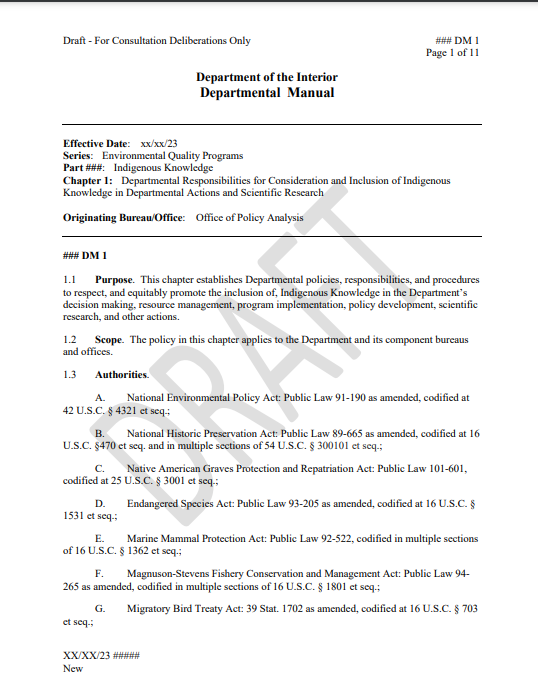
Department of the Interior Departmental Manual
2023
Author(s): US Department of The Interior (.gov)
Indigenous Knowledge (IK) – a body of observations, oral and written knowledge, innovations, practices, and beliefs developed by Indigenous Peoples through interaction and experience with the environment. It is applied to phenomena across biological, physical, social, cultural, and spiritual systems. Indigenous Knowledge can be developed over millennia, continues to develop, and includes understanding based on evidence acquired through direct contact with the environment and long-term experiences, as well as extensive observations, lessons, and skills passed from generation to generation.
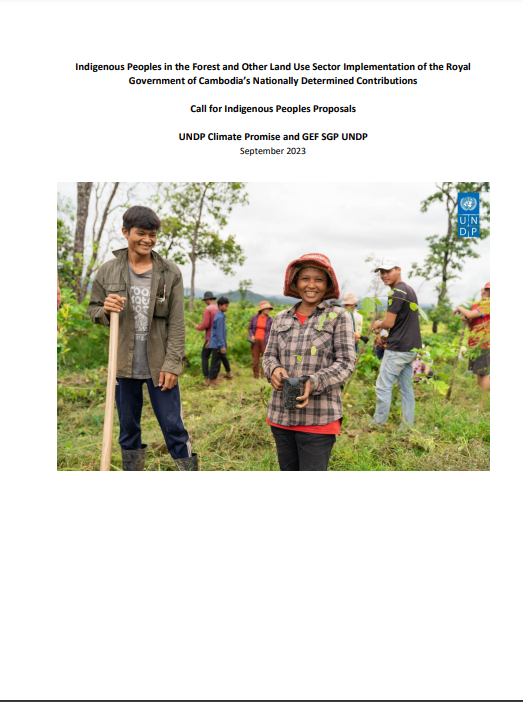
Indigenous Peoples in the Forest and Other Land Use Sector Implementation of the Royal Government of Cambodia’s Nationally Determined Contributions : Call for Indigenous Peoples Proposals
2023
Author(s): United Nations Development Programme
This document is specifically designed for IPs in the country and will fund IPOs, LNGOs or CBOs who work directly with IPs and indigenous communities to contribute to the implementation of the country’s Nationally Determined Contributions (NDC) in the Forest and Other Land Use (FOLU) sector.

Skills for Culture : A Toolkit For Cultural Heritage Practitioners
2022
Author(s): Eboso A , Maina CT , Gachara G , Mulonzya M , Igombo R
The Skills for Culture - Cultural Heritage in Kenyan Counties Report (2022) noted a rise in the meaningful collaborations and strategic partnerships for the promotion of cultural heritage in counties of Kenya. These strategic partnerships happen between county government departments, national government administrations at county level, the private sector, financial institutions, civil society groups, development partners, and community- based organizations, among others.

Using Traditional and Indigeneous Knowledge for Disaster Risk Reduction
2022
Author(s): United Nations Office for Disaster Risk Reduction (UNDRR)
Traditional and indigenous knowledges offer a lens through which we can understand risk reduction and engagement better, enrich resilience building efforts and develop empowering solutions. Many sources of traditional knowledge are based on cognitive schemes that favour careful and integrative observation and adaptive learning over generations; this often goes hand in hand with a more holistic and ecologically viable approach, leading towards sustainable, democratic and inclusive DRR, response and recovery.

Training Manual for Indigeneous People and Local Communities on The Convention on Biological Diversity
2022
Author(s): The Secretariat of the Convention on Biological Diversity
The IPBES Global Assessment Report on Biodiversity and Ecosystem Services emphasizes that “At least a quarter of the global land area is traditionally owned, managed, used or occupied by indigenous peoples. These areas include approximately 35 per cent of the area that is formally protected and approximately 35 per cent of all remaining terrestrial areas with very low intervention”.

The toolkit is also meant to be accessible and meaningful to multiple audiences, including cultural heritage professionals, policy experts, and others who will be providing input and advising lawmakers. It describes the rationale and the need for limitations and exceptions for preservation copying, and it surveys a range of factors which legislators, heritage professionals, rightsholders, and others should take into account.

Sustainable Development Goal 16 & Indigenous Peoples’ Collective Rights to Land, Territories & Resources
2021
Author(s): Food and Agriculture Organization of The United Nations
In this paper, FAO shares experiences and proposes actions to advance towards the realisation of Indigenous Peoples’ rights to land, territories and resources, urging the countries to protect Indigenous Peoples’ rights as an avenue to achieve the SDG 16.

North Australian Remote BNH Training : Training Manual
2021
Author(s): Bush Fire and Natural Hazards CRC
This project aims to provide a ‘next-generation’ training program that builds on the work that has gone before and leads to increasing levels of competence and confidence and, in its turn, resilience for their communities. The project is a direct response to north Australian stakeholder concerns about existing training; that it is inadequate for their needs.

Gender and national climate planning : Gender integration in the revised Nationally Determined Contributions
2021
Author(s): International Union for Conservation of Nature and Natural Resources
This study aims to: contribute to global and regional gender-climate policy data; enrich regional and national information to better target assistance to countries, their stakeholders and supporters; and inform more robust gender-responsive policymaking, knowledge and action at greater scales.
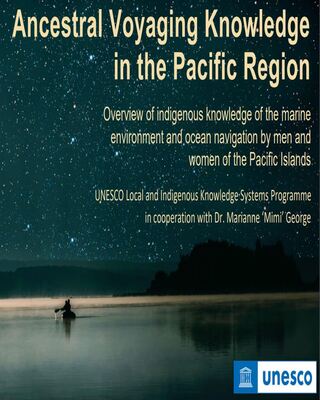
The Canoe Is the People: Indigenous Navigation in the Pacific
2021
Author(s): United Nations Educational, Scientific and Cultural Organization
AVK is a key tool for helping younger people prepare for a new future. AVK contributes to cultural resilience, education, livelihoods, heritage management and resilience for Small Island Developing States (SIDS). The ocean is changing rapidly with climate impacts and loss of biodiversity pose major threats to the Pacific SIDS.