


Knowledge Hub
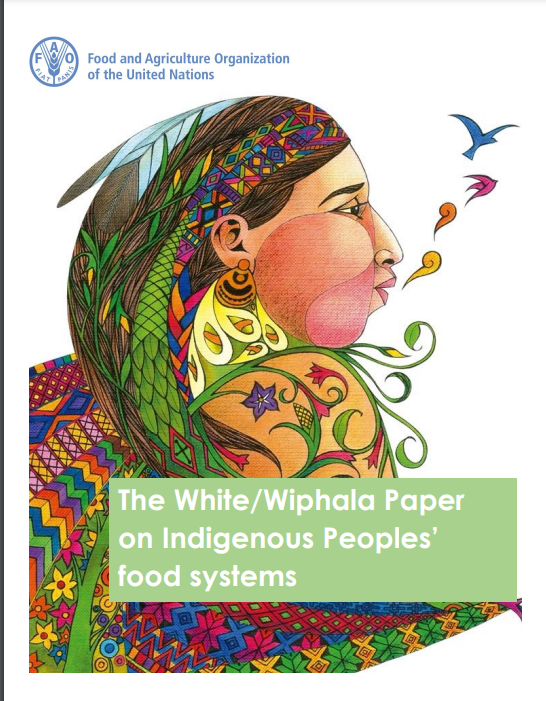
The White/Wiphala Paper on Indigenous Peoples’ food systems
2021
Author(s): Food and Agriculture Organization
This paper highlights the risks of not taking on board the time-tested contributions that Indigenous Peoples have and continue to make for sustainability and territorial management, amongst other dimensions. It also addresses the ongoing policy contradictions and limitations in meeting the Sustainable Development Goals (SDGs), UN Climate Change Conference of Parties’ (COP) debates and international agreements about sustainability.
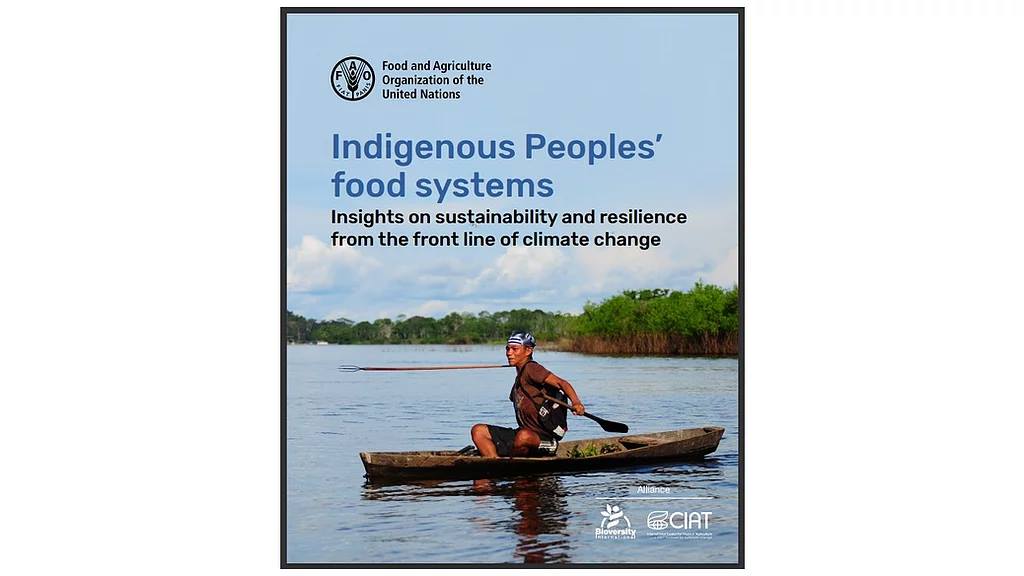
Indigenous Peoples’ Food Systems : Insights on Sustainability and Resilience from the Front Line of Climate Change
2021
Author(s): Food and Agriculture Organization of the United Nations
This book makes valuable contribution to global food system debates, including, but not limited to, the ability to generate food without depleting the natural resource base but rather preserving and enhancing the biodiversity and health of the ecosystems, the use of renewable energy sourced from within the food system, the importance of customary governance mechanisms and institutions, and the role that traditional knowledge plays in climate resilience
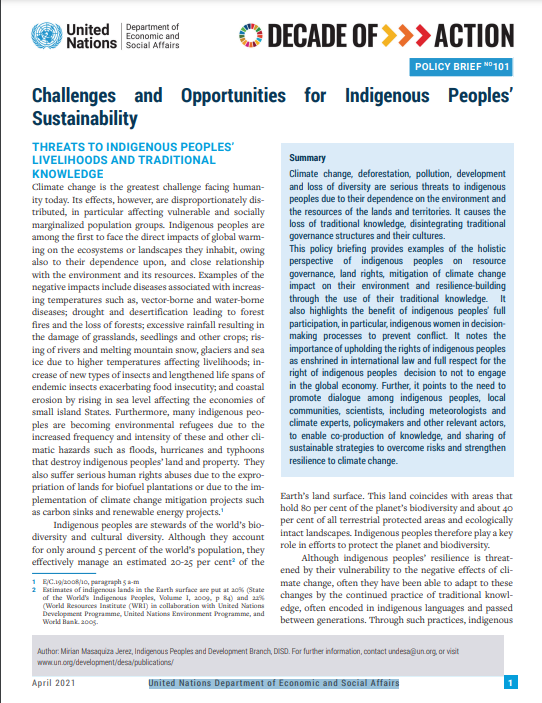
Challenges And Opportunities For Indigenous Peoples’ Sustainability
2021
Publisher/Organisation: United Nations Department of Economic and Social Affairs
Although indigenous peoples’ resilience is threatened by their vulnerability to the negative effects of climate change, often they have been able to adapt to these changes by the continued practice of traditional knowledge, often encoded in indigenous languages and passed between generations.
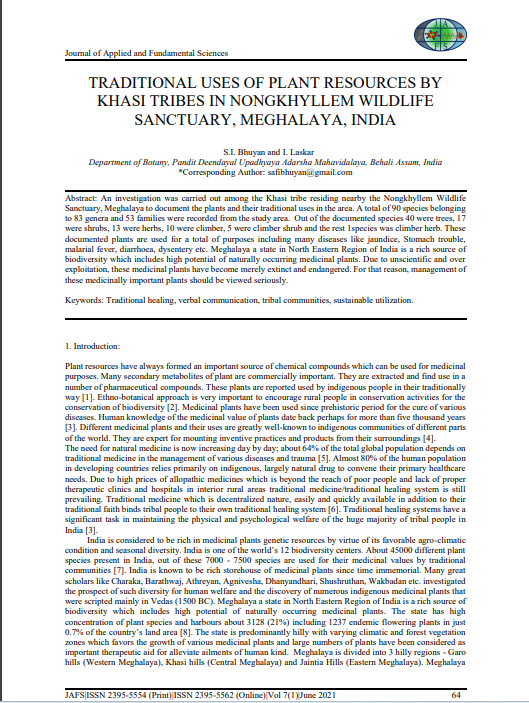
Traditional Uses of Plant Resources by Khasi Tribes in Nongkhyllem Wildlife Sanctuary, Meghalaya, India
2021
Author(s): Bhuyan S I, Laskar I
An investigation was carried out among the Khasi tribe residing nearby the Nongkhyllem Wildlife Sanctuary, Meghalaya to document the plants and their traditional uses in the area.
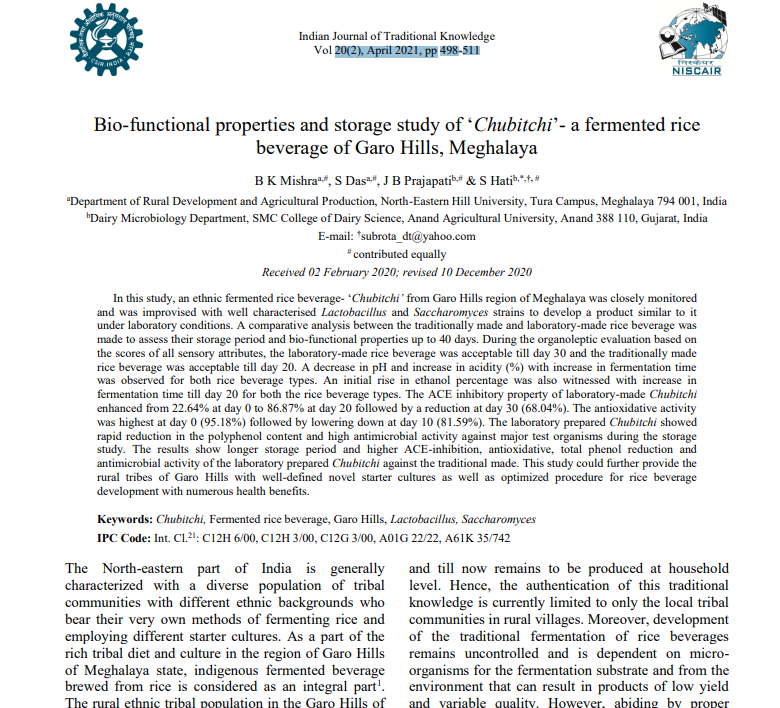
Bio-Functional Properties and Storage Study of ‘Chubitchi’- A Fermented Rice Beverage of Garo Hills, Meghalaya
2021
Author(s): Mishra BK, Das S,Prajapati JB,Hati S
In this study, an ethnic fermented rice beverage- ‘Chubitchi’ from Garo Hills region of Meghalaya was closely ¬¬¬-monitored and was improvised with well characterised Lactobacillus and Saccharomyces strains to develop a product similar to it under laboratory conditions.

Nutritional And Anti-Nutritional Analysis of Wild Edible Plants in Hassan District of Karnataka, India
2021
Author(s): Kumar GMP, Shiddamallayya N
The nutritional potential of twelve wild edible plants of Hassan district was botanically identified and analysed for their nutritional and antinutritional values. The present study showed that the crude protein varied from 0.26±0.05 g/100 g to 5.88±0.55 g/100 g for different plant species.
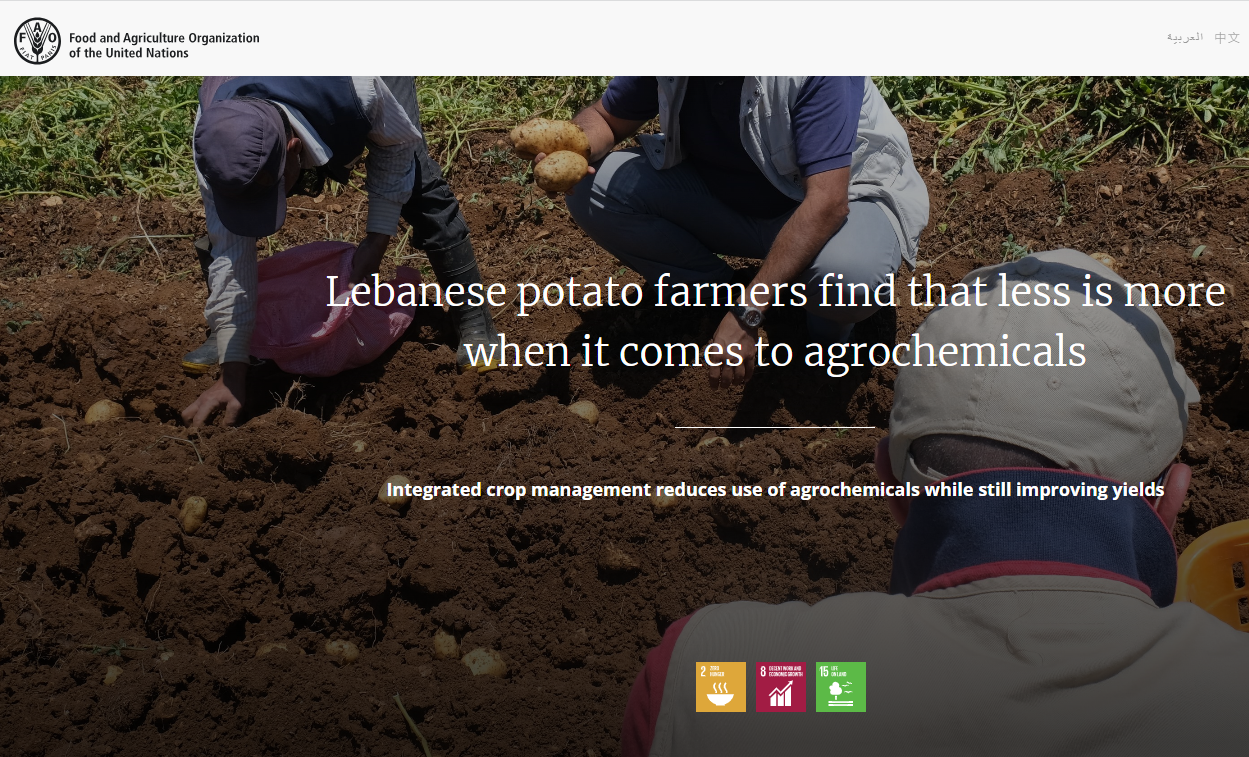
Lebanese Potato Farmers Find That Less is More When it Comes to Agrochemicals: Integrated Crop Management Reduces Use of Agrochemicals While Still Improving Yields
2021
Author(s): Food and Agriculture Organization of the United Nations
Traditionally, farmers in Lebanon depended on chemical fertilizers and pesticides to manage plant nutrition or plant pests and diseases. Most farmers believed that increasing the quantity of chemical fertilizers would increase the yields of their crops.

The Politics of Knowledge: Understanding the Evidence for Agroecology, Regenerative Approaches, and Indigenous Foodways
2021
Author(s): Global Alliance for the Future of Food
Indigenous Peoples’ food systems promote the equitable distribution of resources and power, and support Indigenous identities and values. Food-generative practices are often localized, making use of communal resources and supported by traditional governance systems. Exchange is often barter-based or founded on reciprocal agreements. Indigenous Peoples’ lands, waters, and resources are often used, managed, or governed collectively as a common resource under community-based management. Indigenous Peoples’ systems of collective ownership of resources and food sharing can thus support inter- and intra-community cooperation, the cultivation and maintenance of shared identities, and healthy, resilient, and culturally appropriate food systems.

Time to Act: Investing in Addressing Social Determinants to Improve Health
2021
Author(s): World Economic Forum
This paper provides the building blocks to help private sector players invest in initiatives that address social determinants of health concerns in their communities. Through analysis of pioneering initiatives, the paper extrapolates key overarching guidelines and principles, as well as steps for design planning, implementation and monitoring.

Advancing Transparency and Impact of Research: Initiating Crosstalk Between Indigenous Research and Mainstream “Open Science”
2021
Author(s): PLui PP , Skewes MC , Gobrial S, Rollock D
The study concluded that the dialogue to find connections between open science and Indigenous science are likely to benefit all who use research to create useful understanding that empowers people—and the communities it is intended to help.