


Reports

Water, ice, society, and ecosystems in the Hindu Kush Himalaya: an outlook
2023
Author(s): Wester P, Chaudhary S, Chettri N, Jackson M, Maharjan A, Nepal S, Steiner JF
This assessment report aims to meet this need by informing the people of the HKH, decision makers, practitioners, and the global community on the rapidly changing cryosphere in the HKH and its impacts on water, biodiversity, and societies, based on the latest science.
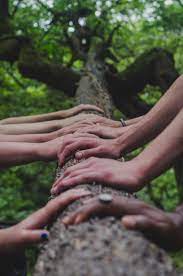
Embedding indigenous knowledge in the conservation and restoration of landscapes
2023
Author(s): World Economic Forum
This report puts forward a set of principles and practices to inform how investors should think and what investors should do to engage Indigenous peoples and their knowledge in conservation and restoration of landscapes.

State of the World’s Indigenous Peoples, vol 5: Rights to Lands, Territories and Resources
2023
Author(s): United Nations
This publication offers a wide-ranging perspective on indigenous peoples’ rights to lands, territories and resources, analysing legislation and agreements at the national and international levels as well as customary law.

Mountain Women of the World – Challenges, Resilience and Collective Power
2022
Author(s): Food and Agriculture Organization of the United Nations
This publication highlights the stories and voices of mountain women, with a focus on rural areas and mountain tourism, and outlines a path forward to promote their empowerment and help them to realize their potential as agents of sustainable mountain development. It includes on-the-ground interviews with mountain women in eight countries (Argentina, Bolivia, Chile, Italy, Kenya, Kyrgyzstan, Nepal and the United Republic of Tanzania) and the results of a global survey.

Wisdom to Build: A Compendium of Locally Evolved Material and Techniques for Sustainable Self-Built Housing
2022
Author(s): Roychowdhury A, Sareen R, Singh M, Grover S, Harikrishnan CU
This compendium solely focused on traditional construction material, technologies and skills in different climatic zones. This initiative spreads across 11 states including a deep dive assessment of technologies available in Odisha and West Bengal the states which are most vulnerable to extreme weather events.

Labelling and Certification Schemes for Indigenous Peoples' foods Generating Income while Protecting and Promoting Indigenous Peoples’ values
2022
Author(s): Food and Agriculture Organization, Alliance of Bioversity International and CIAT
The review includes recommendations for various actors to support Indigenous Peoples in their self-determined economic development and towards the sustainable marketization of their products. The review also provides guidelines for Indigenous Peoples willing to engage in such initiatve. Those are applicable to different contexts on the ground, and include good practices, and measures to mitigate risks.

The state of food security and nutrition in the world 2022: repurposing food and agricultural policies to make healthy diets more affordable
2022
Author(s): Food and Agriculture Organization of the United Nations
The report highlights the intensification of major drivers of food insecurity and malnutrition: conflict, climate extremes and economic shocks, combined with growing inequalities. The issue at stake is not whether adversities will continue to occur or not, but how we must take bolder action to build resilience against future shocks.
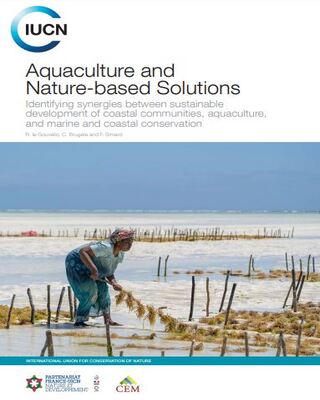
Aquaculture and nature-based solutions: identifying synergies between sustainable development of coastal communities, aquaculture, and marine and coastal conservation
2022
Author(s): Gouvello R, Brugere C, Simard F
The present report examines the emerging concept of Nature-based Solutions (NbS) and the IUCN Global Standard (IUCN, 2020a) when applied to social-ecological systems that include aquaculture production.

The Use of Climate-Related Indigenous Knowledge Systems to Support Anticipatory Action in Zimbabwe
2022
Author(s): World Food Programme
This study includes an overview of indigenous knowledge system indicators for climate forecasting and key recommendations on using climate-related indigenous knowledge services to support anticipatory action in Zimbabwe.
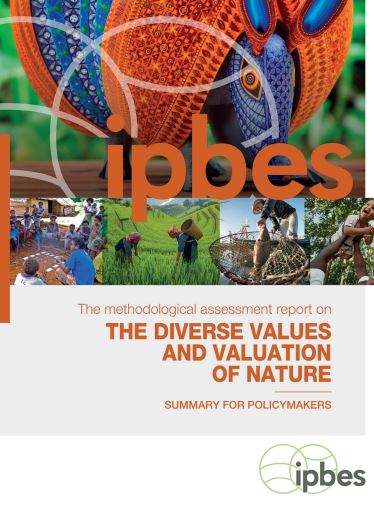
Summary for Policymakers of the Methodological Assessment Regarding the Diverse Conceptualization of Multiple Values of Nature and Its Benefits, Including Biodiversity and Ecosystem Functions and Services
2022
Author(s): Intergovernmental Science-Policy Platform on Biodiversity and Ecosystem Services
The values assessment provides guidelines, criteria, tools and a road map to navigate the ways in which values play out in decisions, as well as the role values and valuation can have in achieving more sustainable pathways. It should be noted that the assessment does not provide quantifications.