


Knowledge Hub

Indigenous Knowledge System and Traditional Medicinal Practitioner
2019
Author(s): Jaiswal A
This study was carried out among the Tagin tribe of Arunachal Pradesh based on the secondary literature collected from different libraries, tribal research centers of India. The result documented 10 medicinal plants used by the Traditional Medicinal Practitioner (TMS) of Tagin tribe for use in traditional medicine.

Local Perceptions and Adaptation of Indigenous Communities to Climate Change: Evidences from High Mountain Pangi Valley of Indian Himalayas
2019
Author(s): Meena RK, Vikas, Verma TP, Yadav RP, Mahapatra SK, Surya JN, Singh D, Singh SK
The present study was undertaken with aim to understand the perceptions of indigenous communities about climate change pattern and its local impacts on climate variables, seasons, agriculture, biodiversity and adaptive strategies in geographical and technological-isolated Pangi valley situated in Chamba district, Himachal Pradesh.

This edited collection argues for the importance of recovering Indigenous participation within global networks of imperial power and wider histories of "transnational" connections.

Tourism and Indigenous Heritage in Latin America: As Observed through Mexico's Magical Village Cuetzalan
2019
Author(s): Casper Jacobsen
The book demonstrates how tourism initiatives that center on indigenous cultural heritage and recognition do not self-evidently empower indigenous citizens, and may pave the way for extracting indigenous heritage as a national resource to the benefit of local elites and tourist visitors.
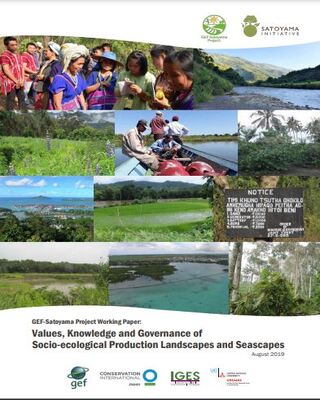
Values, Knowledge and Governance of Socio-Ecological Production Landscapes and Seascapes
2019
Author(s): Takahashi Y, Lopez-Casero F, Natori Y, Dublin D
This publication aims at compiling and disseminating good practices and lessons learnt from the outcomes of the GEF-Satoyama Project, which supported on-the-ground demonstration of sustainable management of socio-ecological production landscapes and seascapes (SEPLS) in ten countries in three biodiversity hotspots.
Mutual Coexistence and Stewardship to Nature: Exploring the Philosophical Foundations of an Indigenous Environmental Ethics in Ethiopia
2019
Author(s): Merawi F
This paper uses environmental ethics to identify the role of indigenous ethical values for the protection of the environment in Ethiopia. Currently attempts are made to find sustainable ways of relating to the environment. The paper as such demonstrates the vitality of such ethical values in comparison with modern ethical systems that are narrowly focused on the instrumental control over the environment.
The Case to Recognise Indigenous Knowledge as Science
2019
Author(s): Albert Wiggan | TEDxSydney
In this passionate talk, Albert Wiggan calls for better recognition from the scientific community arguing that Indigenous knowledge is science and that's what we should call it.

Journal of Indigenous Knowledge and Development Studies (JIKDS)
2019
Publisher/Organisation: Bule Hora University
The journal's intent is to be a platform for the exchange of information and research results that describe significant advances in relation to the nexus of indigenous knowledge and development studies. It is committed to publishing quality works and serves as a communication medium among professionals, researchers, practitioners, and other interested scholars. Furthermore, it encourages researchers and publishers to focus on community-oriented issues that contributes to link development and indigenous knowledge.

Handbook of Research on Indigenous Knowledge and Bi-Culturalism in a Global Context
2019
Author(s): Hameed S, El-Kafafi S, Waretini-Karena R
The handbook is a collection of innovative studies on the nature of indigenous bodies’ knowledge that incorporates the sacred or spiritual influence across various countries following World War II, while exploring the difficulties faced as society immerses itself in bi-culturalism.
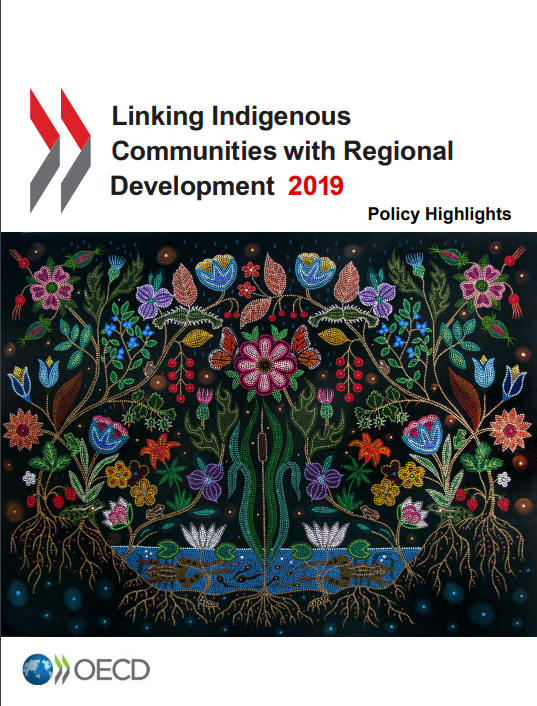
Linking Indigenous Communities with Regional Development 2019 : Policy Highlights
2019
Publisher/Organisation: The Organization for Economic Cooperation and Development (OECD)
Despite these achievements, Indigenous peoples have to confront and overcome histories of discrimination, loss, and dispossession. European settlements, for example, severely shrunk and permanently altered the land and resources available for Indigenous peoples to sustain their traditional economies. Dependency relationships with states and religious institutions further resulted in Indigenous economic activities being determined within a framework set by non-Indigenous peoples. As a result, the capacity for Indigenous peoples to set their own development pathway was diminished, negatively affecting their wellbeing, language and culture.