


Knowledge Hub
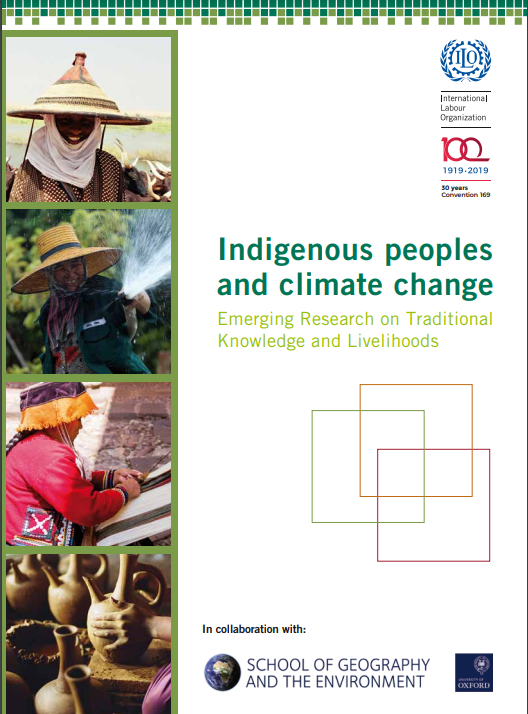
Indigenous Peoples and Climate Change: Emerging Research on Traditional Knowledge and Livelihoods
2019
Author(s): The International Labour Office
The practice of traditional knowledge in the everyday lives of indigenous women and men is yet to be adequately understood, however, with many research gaps confronting policy-makers. Prominent among these is an understanding of the interplay of traditional knowledge systems, rooted in indigenous ways of life, cultural approaches and traditional occupations, with the transformations being experienced in societies, economies, institutions, technologies and the climate.
Gender in Adaptation Planning for the Agriculture Sectors
2019
Author(s): Nelson S , Hill C
The emphasis is on adaptation in agriculture, however the materials can be applied to planning for climate change adaptation in other sectors. In addition to this Guide for Trainers, there are companion PowerPoint templates that workshop organizers can tailor to their specific context.
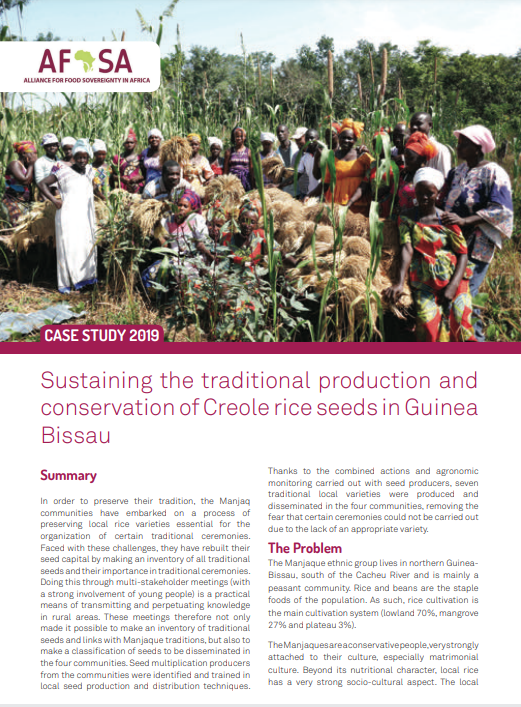
Sustaining The Traditional Production and Conservation of Creole Rice Seeds in Guinea Bissau
2019
Author(s): Junior LP
In order to preserve their tradition, the Manjaq communities have embarked on a process of preserving local rice varieties essential for the organization of certain traditional ceremonies. Faced with these challenges, they have rebuilt their seed capital by making an inventory of all traditional seeds and their importance in traditional ceremonies.

Recommendations on Sustainable Development of Indigenous Tourism
2019
Author(s): World Tourism Organization (UNWTO)
The reports aim that these recommendations is to encourage tourism enterprises to develop their operations in a responsible and sustainable manner, while enabling those indigenous communities that wish to open up to tourism to take full grasp of opportunities that come along, following a thorough consultation process.
Community-Based Monitoring of Indigenous Food Security in a Changing Climate: Global Trends and Future Directions
2019
Author(s): Lam S, Dodd W, Skinner K, Papadopoulos A, Zivot C, Ford J, Garcia PJ, Harper SL
This review provides an evidence-base on the uses, characteristics, and opportunities of CBM, to guide future food security monitoring efforts in the context of climate change.
Exploring the Oral Traditions in Indigenous Languages in Meghalaya for Folklore and Storytelling
2019
Author(s): Sreedhar M , Gayathri C
Meghalaya has a rich cultural influence of natives of Jaintia, Garo and Khasi regions and is set between China and India (INDIAN CULTURE, 2017). As such, Meghalaya is one of the least studied areas and is often overlooked while discussing the Indian culture as a whole. Regardless, the cultural heritage of Meghalaya is undeniable due to the convergence of tribal traditions and multicultural linguistics that are reflected in its folklore and storytelling.
Analysis of Handloom Industry and its major problems In Dakshin Dinajpur of West Bengal
2019
Author(s): Paul A
This study focus on the handloom industry at Dakshin Dinajpur, West Bengal that are facing numbers of problems like- crisis of raw-materials, low wage, sharp decline of number of weaver, lethargy of new generation in adopting weaving as their livelihood, competition with power loom sector, small domestic market.
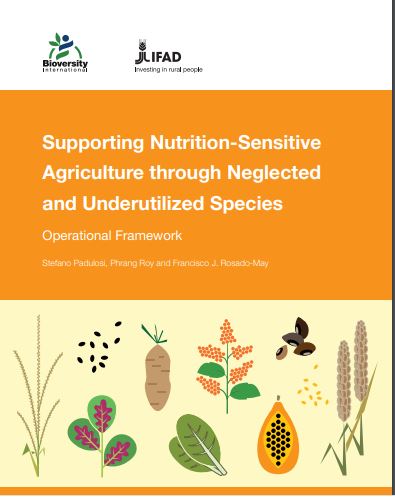
Supporting Nutrition Sensitive Agriculture through Neglected and Underutilized Species: Operational Framework.
2019
Author(s): Padulosi S, Phrang R, Rosado-May F.J.
The purpose of this Operational Framework is to support Country Directors, CPMs and ICOs to integrate NUS and Indigenous Peoples issues into the Loans and support the implementation of IFAD Nutrition Sensitive Agriculture Action Plan 2016-1823 and capacity building efforts in that direction.
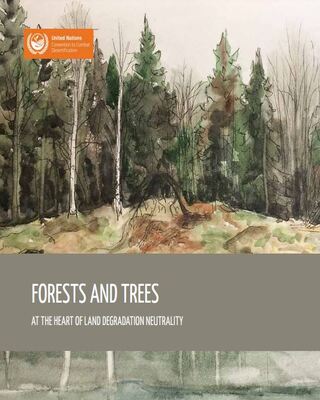
Forests & Trees: At the Heart of Land Degradation Neutrality
2019
Author(s): United Nations Convention to Combat Desertification
The brochure compiles the initiatives of undertaken by countries, leaders, communities and businesses in response to the e existential threat of Land Degradation at all levels, from global to local. The concept of Land Degradation Neutrality (LDN) is an important part of the international response. Supported by the United Nations Convention to Combat Desertification (UNCCD) and embedded in the 2030 Agenda for Sustainable Development under SDG target 15.3, LDN provides a unique framework for governments to measure degradation, design appropriate responses, and monitor progress.

This video talks about the indigenous knowledge systems in Africa. It includes the study of the nature of the African precolonial science,astronomy, the phases of the moon and the African starlore.