


Knowledge Hub

Traditional Hepatoprotective Herbal Medicine of Koch Tribe in The South-West Garo Hills District, Meghalaya
2019
Author(s): Majumdar HC, Shyam JM ,Chowdhury U, Koch D, Roy N
Field survey made in 24 villages of the South-West Garo Hills district, Meghalaya, inhabited mainly by the Koch community helped to gather ethnobotanical information concerning 25 medicinal plant species belonging to 24 Angiospermic and 1 Pteridophytic genus under 22 different families that are used as traditional hepatoprotective herbal medicine.
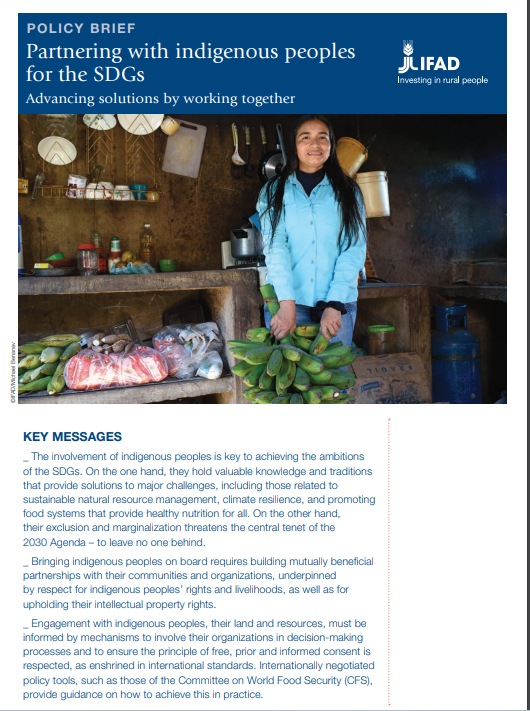
Policy Brief: Partnering with Indigenous Peoples for the SDGs
2019
Publisher/Organisation: International Fund for Agricultural Development
Engagement with indigenous peoples, their land and resources, must be informed by mechanisms to involve their organizations in decision-making processes and to ensure the principle of free, prior and informed consent is respected, as enshrined in international standards. Internationally negotiated policy tools, such as those of the Committee on World Food Security (CFS), provide guidance on how to achieve this in practice.

Indigenous Technical Knowledge of Assam for Pests Management – Exploit Potential in Organic Agriculture
2019
Author(s): Borkakati RN, Barman S, Saikia DK, Gogoi R
One neighborhood investigation was conducted amongst 500 farmers of Nagaon, Golaghat, Jorhat and Dibrugarh districts of Central Brahmaputra valley Zone and Upper Brahmaputra valley Zone of Assam. Only 21.8% of farmers completely practiced the indigenous technology knowhow (ITK) for pest management, though 48.4% were aware about ITKs, whereas 41.8% famers apply synthetic chemical driven approaches.

Supporting Nutrition-Sensitive Agriculture through Neglected and Underutilized Species: Operational Framework
2019
Author(s): Padulosi S, Roy P, Francisco JRM
Agrobiodiversity is a resource that supports human and environmental wellbeing. IFAD’s support for the better use of agrobiodiversity with specific reference to neglected and underutilized species (NUS) and a greater recognition of the traditional knowledge of Indigenous Peoples associated with the use of NUS and wild edibles are important for fighting food and nutrition insecurity, especially in the context of climate change. Both factors have the potential to promote and enhance a sustainable and nutrition-sensitive agriculture (NSA) and associated livelihood outcomes.

Problems of Handloom Weavers: A Case Study of Mangalagiri, Guntur District
2019
Author(s): Maddela S, Pradeep M
This article discusses about the hardships and problems faced by handloom weavers n carrying out their livelihood on handloom. The challenges are due to fierce competition with power loom sector, marketing problem, infrastructural constraints, and rising yarn prices.

Why Indigenous Languages Matter and What We Can Do to Save Them
2019
Author(s): Morcom L
In this talk Dr. Lindsay Morcom (Algonquin MĂ©tis, Bear Clan) an interdisciplinary researcher shars her experience in education, Aboriginal languages, language revitalization, and linguistics.

Recommendations on Sustainable Development of Indigenous Tourism
2019
Publisher/Organisation: World Tourism Organization
This book underscores the appeal of Indigenous cultural heritage to tourists and encourages responsible, consultative tourism development while meeting the rising interest in indigenous cultures.

Traditional Knowledge in Modern India: Preservation, Promotion, Ethical Access and Benefit Sharing Mechanisms
2019
Author(s): Sengupta N
This book demonstrates how traditional knowledge can be connected to the modern world. Human knowledge of housing, health and agriculture dates back thousands of years, with old wisdom developing and becoming modern.

Sacred Landscapes, Indigenous Knowledge, and Ethno-culture in Natural Resource Management: Understanding Multiple Perspectives of Nature Conservation
2018
Author(s): Rai S C, Mishra P K
This book examines the relationship between sacred landscapes, indigenous knowledge, ethno-culture, and natural resource management. The volume contributes to the existing literature on landscape studies and cultural geography by examining local perceptions toward multiple aspects of sacred landscape and ethno-culture under changing social and economic contexts, with case studies from diverse cultural and geographical areas worldwide.
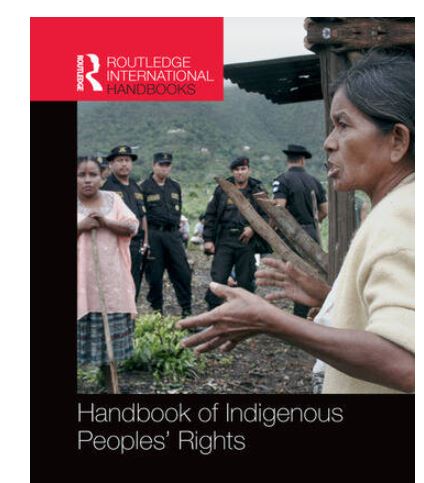
This handbook is a comprehensive interdisciplinary overview of indigenous peoples’ rights. Chapters by experts in the field examine legal, philosophical, sociological and political issues, addressing a wide range of themes at the centre of debates on the rights of indigenous peoples.