


Reports

Global Citizenship Education: Critical and International Perspectives
2020
Author(s): Akkari A, Maleq K
The book provides a comprehensive and geographically based overview of the challenges citizenship education faces in a rapidly changing global world through the lens of diversity and inclusiveness.

Climate of the middle: understanding climate change as a common challenge
2020
Author(s): Siegmann A
This volume brings together the insights of a number of scholars who each write from their own expertise about climate change and its consequences for society at large. Some of them are descriptive, explaining the most recent insights in human behaviour and perception of climate risks.
Kew’s State of the World’s Plants and Fungi project provides assessments of our current knowledge of the diversity of plants and fungi on Earth, the global threats that they face, and the policies to safeguard them.
Community seed banks: concept and practice- facilitator handbook
2020
Author(s): Vernooy R, Sthapit B, Bessette G
The content of this handbook, directly and indirectly, reflects our Bioversity International, community seed bank expertise resulting from over 25 years of work in the field collaborating with many researchers, practitioners, and farmers and in the office through literature reviews, critical reflections, and discussions about our work, as well as writing stories, papers, articles, and books.

Indigenous women, daughters of Mother Earth
2020
Author(s): Food and Agriculture Organization of the United Nations (FAO)
This document presents some of the main challenges that indigenous women face and provide recommendations to eliminate the barriers that prevent indigenous women from achieving their full potential and their ability to contribute to the achievement of the 2030 Agenda for Sustainable Development.

State of the World's Indigenous Peoples: Implementing the United Declaration on the Rights of Indigenous Peoples, Vol IV
2019
Author(s): United Nations
On 13 September 2007, the United Nations General Assembly adopted the United Nations Declaration on the Rights of Indigenous Peoples. The adoption of the Declaration marked the culmination of decades of struggle among indigenous peoples for a universal framework establishing minimum standards to ensure the survival, dignity and well-being of the indigenous peoples of the world. Since the adoption of the Declaration, there has been progress at the international, regional and national levels towards achieving the rights of indigenous peoples. The Declaration has informed and influenced the adoption of laws, policies, judicial decisions and operational guidelines that respect and uphold the rights of indigenous peoples. However, progress has been uneven and variable within and between countries and regions.

Recommendations on Sustainable Development of Indigenous Tourism
2019
Author(s): World Tourism Organization (UNWTO)
The reports aim that these recommendations is to encourage tourism enterprises to develop their operations in a responsible and sustainable manner, while enabling those indigenous communities that wish to open up to tourism to take full grasp of opportunities that come along, following a thorough consultation process.
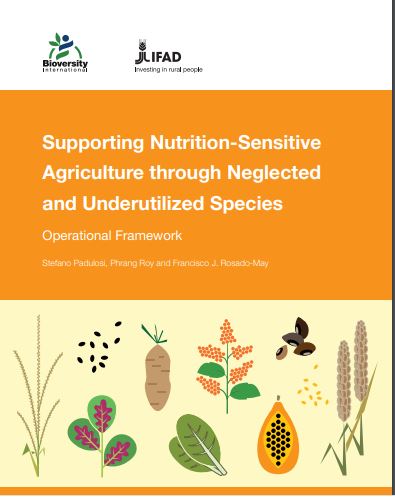
Supporting Nutrition Sensitive Agriculture through Neglected and Underutilized Species: Operational Framework.
2019
Author(s): Padulosi S, Phrang R, Rosado-May F.J.
The purpose of this Operational Framework is to support Country Directors, CPMs and ICOs to integrate NUS and Indigenous Peoples issues into the Loans and support the implementation of IFAD Nutrition Sensitive Agriculture Action Plan 2016-1823 and capacity building efforts in that direction.

Supporting Nutrition-Sensitive Agriculture through Neglected and Underutilized Species: Operational Framework
2019
Author(s): Padulosi S, Roy P, Francisco JRM
Agrobiodiversity is a resource that supports human and environmental wellbeing. IFAD’s support for the better use of agrobiodiversity with specific reference to neglected and underutilized species (NUS) and a greater recognition of the traditional knowledge of Indigenous Peoples associated with the use of NUS and wild edibles are important for fighting food and nutrition insecurity, especially in the context of climate change. Both factors have the potential to promote and enhance a sustainable and nutrition-sensitive agriculture (NSA) and associated livelihood outcomes.

The State of the World’s Biodiversity for Food and Agriculture
2019
Author(s): Food and Agriculture Organization of the United nations FAO
The reports highlight the importance of biodiversity, at genetic, species and ecosystem levels, to efforts to address the challenges posed by diverse and changing production systems. Many emphasize the role of diversification – using multiple species, integrating the use of crop, livestock, forest and aquatic resources, and conserving and managing habitat diversity at landscape or seascape scale – in promoting resilience, improving livelihoods and supporting food security and nutrition.