


Knowledge Hub

Wild Edible Plants Used by Garo Tribes of Nokrek Biosphere Reserve in Meghalaya, India
2012
Author(s): Singh B, Sinha BK, Phukan SJ, Borthakur SK, Singh VN
The paper deals wild edible plants of Nokrek Biosphere Reserve, Meghalaya used by the Garo tribes. It comprises of 71 species under 61 genera and 42 families.

Traditional System of Water Management in Watersheds of Arunachal Pradesh
2012
Author(s): Pattanaaik SK, Sen D, Kumar N,Moyong O ,Debnath P
The Yetbung Lingang and Linkum are such traditional water conservation structures made up of locally available stones/ boulders, bamboo and tokopata and used to divert the perennial stream of the area for Panikheti and winter crop cultivation.

Determination of Dyeing Property of Some Medicinally Important Plant Species of Uttarakhand Himalayas
2012
Author(s): Akhtar R, Negi JS, Naithani R
In the present study, Myrica esculenta Buch.-Ham., Pinus roxburghii Sarg. and Terminalia chebula Retz. have selected as natural dyes on the basis of their traditional uses.

Nutritional Value of Some Traditional Edible Plants Used by Tribal Communities During Emergency with Reference to Central India
2012
Author(s): Jain AK , Tiwari P
Paper deals with the study of a large number of plant species used by tribes in emergency, i.e. during scarcity of food. Information on uses of plants by tribes from abroad and various regions of India has been provided
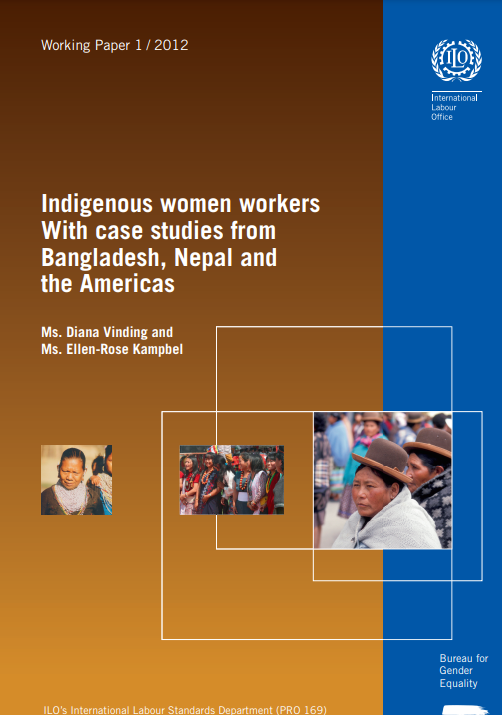
Indigenous Women Workers – With Case Studies from Bangladesh, Nepal and the Americas
2012
Author(s): Vinding D , Kampbel ER
Indigenous women have been active at the national and international levels to promote the rights of their peoples and draw attention to the specific issues and challenges that they face as indigenous women. They actively contributed to negotiations leading to the establishment of the Permanent Forum on Indigenous Issues in 1993, and subsequently to the adoption of the UN Declaration on the Rights of Indigenous Peoples in September 2007. They also ensured that a resolution on indigenous women was adopted at the 49th Session of the Commission of the Status of the Women (CSW) in March, 2005.

Solutions to the Food and Ecological Crisis Facing Us Today
2012
Author(s): Vandana S
Dr Shiva Vandana is a philosopher, environmental activist, eco feminist and author of several books speaks about the non-violent Chipko movement of1970 and alter-globalization movement.

Utilization and Conservation of Natural Resources in Mountain Habitat: A Study on Livelihood Pattern and Indigenous Knowledge System of the Memba of Arunachal Pradesh
2012
Author(s): Marry L
The field study in the various Memba villages reveals that these people are dependant on the surrounding forest for their day-today necessities or requirements. Their traditional belief and practices have helped them in the preservation of their age-old culture and along with it in the conservation of the forest.

The Power of Local Action Lessons from 10 Years of the Equator Prize
2012
Author(s): Mock G, Corcoran J, Hughes O
This book presents the results of this analysis. Its objective is to distill key lessons on successful community-based action in environment and development. The book limits itself to a treatment of twelve key lessons with the greatest relevance for understanding and catalyzing effective ecosystem-based action at the local level.

Strengthening of Traditional Paddy Seed Selection Practices of Tribal Farm Families with Improved Knowledge and Skills in Koraput district, Odisha
2012
Author(s): Mishra S, Chaudhury SS, Nambi VA
This paper examines the impact of training on the knowledge and skill of farmers with a specific focus on seed selection practices and its management.

Weathering Uncertainty: Traditional Knowledge for Climate Change Assessment and Adaptation
2012
Author(s): Nakashima DJ, Galloway MK, Thulstrup HD, Ramos CA, Rubis JT
The book draws attention to a rapidly-growing scientific literature on the contribution of indigenous and traditional knowledge to understanding climate change vulnerability, resilience and adaptation. It aims at strengthening consideration of indigenous knowledge in the Fifth Assessment Report of the Intergovernmental Panel on Climate Change (IPCC), to be released in 2014.