


Knowledge Hub

The book focuses on two major challenges that arise in the discussion of indigenous knowledge - its proper definition and the methodologies appropriate to the exploitation of local knowledge. These concerns are addressed in a range of ethnographic contexts.
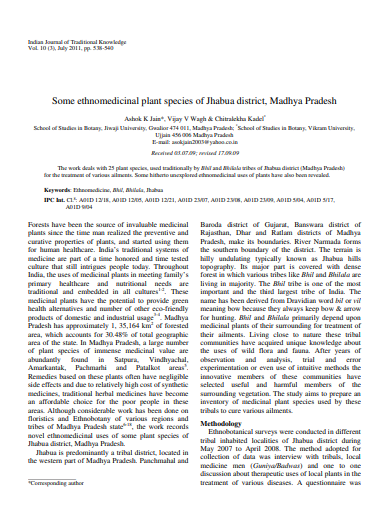
Some Ethnomedicinal Plant Species of Jhabua district, Madhya Pradesh
2011
Author(s): Jain AK, Wagh VV, Kadel C
The work deals with 25 plant species, used traditionally by Bhil and Bhilala tribes of Jhabua district (Madhya Pradesh) for the treatment of various ailments.

Indigenous Peoples and the Collaborative Stewardship of Nature Knowledge Binds and Institutional Conflicts
2011
Author(s): Ross A, Sherman K P, Snodgrass J G, Delcore H D, Sherman R
This book offers a comprehensive and global overview of the theoretical, methodological, and practical dimensions of co-management.

National action plan on biodiversity persistence and climate change
2011
Author(s): Government of Bhutan
The goal of this action plan is to enable persistence of biodiversity to adapt to climate change, reduce vulnerability from its impacts, and promote sustainable utilization of biodiversity to engender socio-economic development of the country.
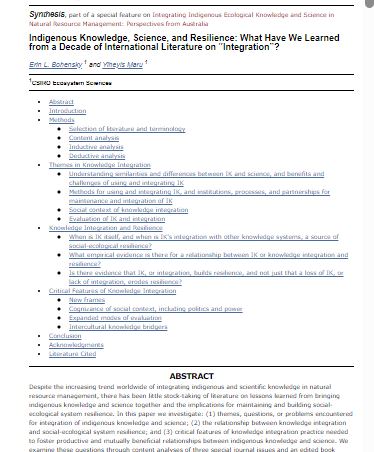
Indigenous Knowledge, Science, and Resilience: What Have We Learned from a Decade of International Literature on “Integration”?
2011
Author(s): Bohensky EL, Maru Y
This paper investigated the themes, questions, or problems encountered for integration of indigenous knowledge and science; the relationship between knowledge integration and social-ecological system resilience; and critical features of knowledge integration practice needed to foster productive and mutually beneficial relationships between indigenous knowledge and science.
This sourcebook is intended to assist technical and research institutions, schools and consultants by providing background information, interesting case studies and specific recommendations for action relating to agrobiodiversity.

Wild Edible Fungal Resources Used by Ethnic Tribes of Nagaland, India
2011
Author(s): Bhaben T,Gurung L,Chandra SG
The paper documents the knowledge about the wild edible fungal flora of Kohima district of Nagaland, India used by the indigenous tribes through structured questionnaires in consultations.
State of the worlds forests 2011
2011
Author(s): Food and Agriculture Organization of the United Nations
This biennial report provides an insight on the role of forests in creating sustainable livelihoods and focuses on four key areas - regional trends on forest resources, development of sustainable forest industries, climate change mitigation and adaptation & the local value of forests.

Plants Used as Agricultural Seasons Indicator By Mao Naga tribe, Manipur, India
2011
Author(s): Mao AA, Hynniewta MT
The paper presents four plants used as an agricultural season indicator by Mao Naga tribe of Manipur, India. Agriculture is the main occupation of the tribe and they have a unique way of knowing plantation season for different crops by observing the flowering of some plants.

Ethno-Medicinal Wisdom of Tribals of Aurangabad district (M.S.), India
2011
Author(s): Mali PY , Bhadane VV
The present communication provides interesting unpublished traditional phytotherapy of seventy two indigenous medicinal plants used by rural and tribal population of Aurangabad district, Maharashtra, India to treat various human ailments.