


Books

This volume offers a clear message for genocide scholars and others concerned with crimes against humanity and genocide: much greater attention must be paid to the plight of all peoples, indigenous and otherwise, no matter how small in scale, how little-known, how "invisible" or hidden from view.
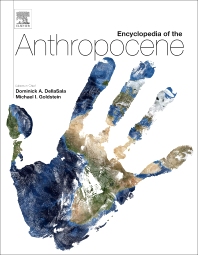
The encyclopedia presents a currency-based, global synthesis cataloguing the impact of humanity’s global ecological footprint. Covering a multitude of aspects related to Climate Change, Biodiversity, Contaminants, Geological, Energy and Ethics, leading scientists provide foundational essays that enable researchers to define and scrutinize information, ideas, relationships, meanings and ideas within the Anthropocene concept.

From Primitive to Indigenous: the Academic Study of Indigenous Religions
2017
Author(s): Cox J L
Evaluating this assumption in the light of case studies drawn from Zimbabwe, Alaska and shamanic traditions, and in view of current debates over 'primitivism', the author mounts a defence for the scholarly use of the category 'Indigenous Religions'.Â
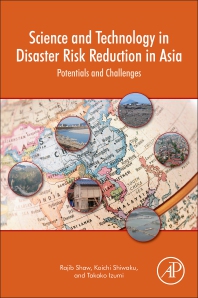
Science and Technology in Disaster Risk Reduction in Asia: Potentials and Challenges
2017
Author(s): Shaw R, Shiwaku K, Izumi T
The book provides both a local and global perspective on how to implement the Sendai Framework for Disaster Risk Reduction. Topics demonstrate the advancement of scientific research as it applies to early warning systems, including identifying risk and the strengthening of infrastructure for different types of hazards.

Planning in Indigenous Australia: From Imperial Foundations to Postcolonial Futures
2017
Author(s): Jackson S, Porter L, Johnson L C
The book maps the enduring effects of colonisation. It provides a new historical account of colonial planning practices and rewrites the urban planning histories of major Australian cities.

This book provides a unique look at Indigenous perspectives on museum community engagement and the process of self-representation, specifically how the First Nations Elders of the Blackfoot Confederacy have worked with museums and heritage sites in Alberta, Canada, to represent their own culture and history.

This book offers readers the chance to further their understanding of indigenous religious musics by providing downloadable resources that include the discussed music and additional information on other available recordings.

The book provides a comprehensive look at issues that concern indigenous people in North America. Though no single volume can cover every tribe and every issue around this fertile area of inquiry, this book takes on the fields of law, archaeology, literature, socio-linguistics, geography, sciences, and gender studies, among others, in order to make sense of the Indigenous experience.

Indigenous Knowledge: Enhancing Its Contribution to Natural Resources Management
2017
Author(s): Sillitoe P, Ainslie A, Amanor K
By drawing together strands of biocultural diversity research into natural resources management, this book: - Provides an overview of conceptual issues around IK and its contributions to sustainable agriculture and environmental conservation; - Addresses key themes via case studies from bioculturally diverse regions of the world; - Displays a wide range of methodologies and outlines a possible agenda to guide future work.

Handbook of Research on Social, Cultural, and Educational Considerations of Indigenous Knowledge in Developing Countries
2016
Author(s): Ngulube P
The handbook is an authoritative reference source for the latest scholarly research on the importance of knowledge and value systems at the community level and ways indigenous people utilize this information.