


Research Papers/Articles

Ethno-medico-botanical Knowledge of Tiptur taluk in Tumkur district of Karnataka, India
2015
Author(s): Achar KGS, Boosanur V, Shivanna MB
The present study indicated that the herbal healers have a fair knowledge and a considerable number of their formulations are new records.

Ethnoveterinary Practices for Small Ruminants Followed by Rural Folks in Southern Odisha
2015
Author(s): Rautray AK, Sahoo R , Sardar KK, Patra RC , Sahoo A
A total of 23 species of herbal plants have been identified which were used either alone or in combination as traditional remedies for 24 different conditions/ diseases in livestock including important conditions like hoof infection, liver disorder and enteritis to emergency conditions like tympany/ bloat and hemorrhage.

Maasai People and Elephants: Values and Perceptions
2015
Author(s): Kioko J,Kiffner C , Ndibalema V , Hartnett E, Seefeld C
This study shows that elephant conservation programs should consider level of awareness, the values and perceptions of the local people.

Antioxidant Potential of Garlic and Turmeric Mixture–A Traditional Indonesian Formulation
2015
Author(s): Sukandar EY , Adnyana IK , Nurfitria RS
This study shows that combination of garlic and turmeric extract showed higher antioxidant activity in vitro compared to each extract, but in ex-vivo study showed similar effect.

Sacred Groves of Meghalaya: A Review
2015
Author(s): Kharkongor BM, Tiwari BK
This review paper highlights some of the works done on sacred groves with special emphasis on the sacred groves of Meghalaya in North-east India

Quality Assessment and Evaluation of in-vitro Antioxidant Potential of Phyllanthus emblica L.
2015
Author(s): Singh M, Khan MA, Khan MS,Ansari SH, Ahmad S
The work embodied in the present research can be utilized for the quality control and for the identification of the drug samples.

An Indigenous Epistemological Approach to Promote Health Through Effective Knowledge Translation
2015
Author(s): Roy S, Campbell B
This paper discusses essential characteristics of effective knowledge translation practices and presents two examples of best practices of knowledge translation in indigenous contexts.
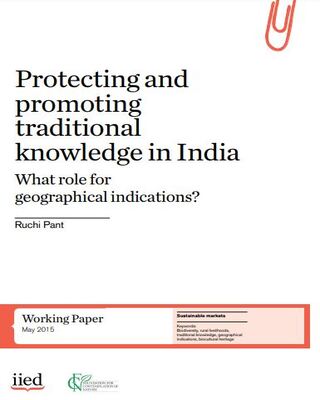
Protecting and Promoting Traditional Knowledge in India: What Role for Geographical Indications?
2015
Author(s): Pant, Ruchi
This paper explores the opportunities and challenges associated with the use of geographical indications (GIs) to promote biocultural products in the market. Biocultural products are produced using traditional knowledge (TK). They are typically unique to a geographical area and are derived from the particular biological resources, traditional knowledge and cultural values and practices associated with the landscape – which make up the `biocultural heritage’ of indigenous peoples and local communities.

The Impacts of Land Dispossession on Indigenous Women
2015
Author(s): Asia Indigenous Peoples Pact (AIPP)
This briefing paper highlights the specific conditions of indigenous women, who comprise a major segment of indigenous communities where development projects are being implemented in India, Indonesia and Cambodia.

Bridging Indigenous and Western Sciences: Research Methodologies for Traditional, Complementary, and Alternative Medicine Systems
2015
Author(s): Massey A, Kirk R
This article presents a narrative synthesis that identifies and compares methodologies used in the evaluation of traditional healing practices. In considering the aim(s), suitability, and validity of each approach, contributions can be made to the interpretation of research findings for maximum receptivity to learnings brought to light in a meeting ground between two distinct worldviews (Popay et al., 2006).