



Research Papers/Articles

Nuances of Traditional Knowledge in Utilization of Rice Landraces by a Farming Community in North-Eastern Thailand
2014
Author(s): Chunta S, Prathepha P , Thiha, Jongdee B
This paper presents the traditional knowledge of utilization of rice landraces of farmers in four selected locations of Northeastern Thailand (Sakon Nakhon, Roi Et, Ubon Ratchathani and Nakon Rachasima Provinces).
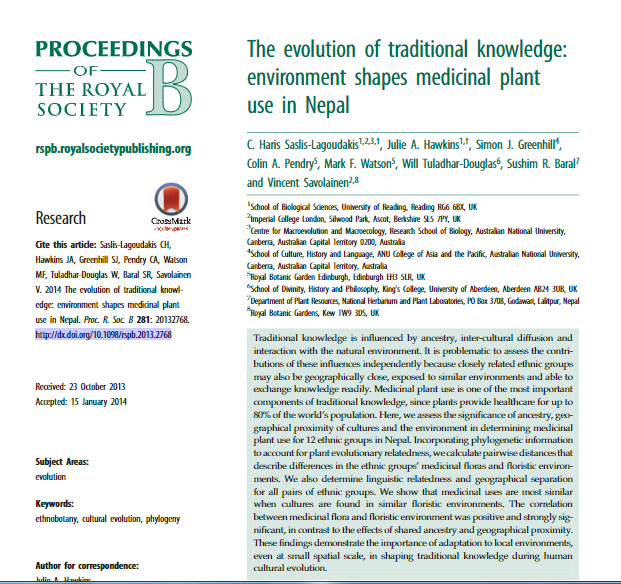
The Evolution of Traditional Knowledge: Environment Shapes Medicinal Plantuse in Nepal
2014
Author(s): Lagoudakis CHS, Hawkins JA, Greenhill SJ
The study shows that medicinal uses are most similar when cultures are found in similar floristic environments. The correlation between medicinal flora and floristic environment was positive and strongly significant, in contrast to the effects of shared ancestry and geographical proximity.
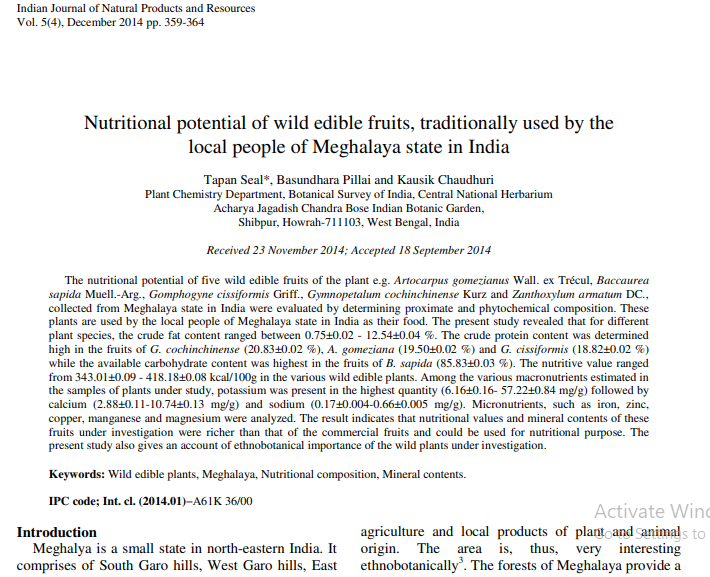
Nutritional Potential of Wild Edible Fruits, Traditionally Used By the Local People of Meghalaya State in India
2014
Author(s): Seal T, Pillai B, Chaudhuri K
The nutritional potential of five wild edible fruits of the plant e.g. Artocarpus gomezianus Wall. ex Trécul, Baccaurea sapida Muell.-Arg., Gomphogyne cissiformis Griff., Gymnopetalum cochinchinense Kurz and Zanthoxylum armatum DC., collected from Meghalaya state in India were evaluated by determining proximate and phytochemical composition. These plants are used by the local people of Meghalaya state in India as their food.
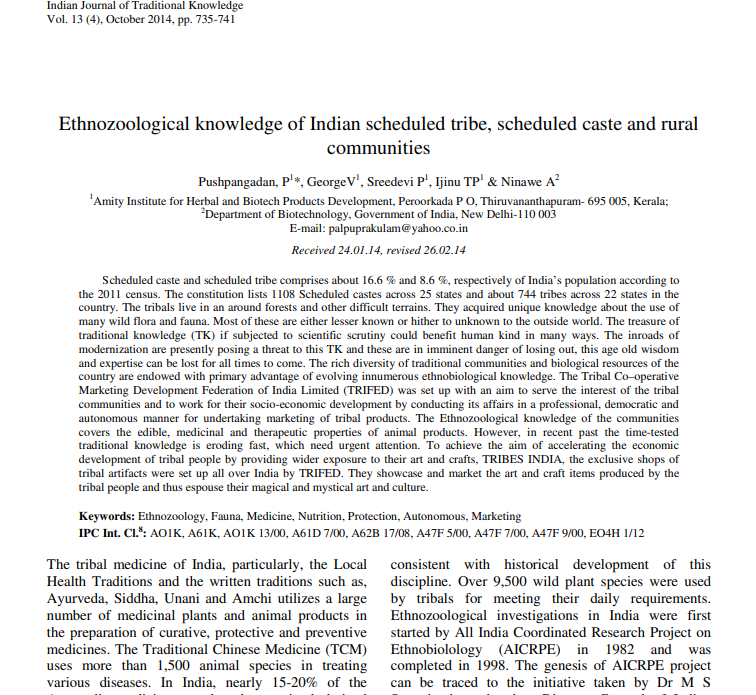
Ethnozoological Knowledge of Indian Scheduled Tribe, Scheduled Caste and Rural Communities
2014
Author(s): Pushpangadan P, George V, Sreedevi P, Ljinu TP, Ninawe A
The tribals live in an around forests and other difficult terrains. They acquired unique knowledge about the use of many wild flora and fauna. Most of these are either lesser known or hither to unknown to the outside world. The treasure of traditional knowledge (TK) if subjected to scientific scrutiny could benefit human kind in many ways.

Traditional Beekeeping Shows Great Promises for Endangered Indigenous Bee Apis Cerana
2014
Author(s): Singh AK
The outfit survey accomplished in six districts of Nagaland revealed that 26% beekeepers were rearing both species (Apis cerana and Tetragonula iridipennis) and rest only A. cerana. The 65.33% beekeepers were interested to rear in indigenous box and 34.67% beekeepers were interested to scientific beehive.
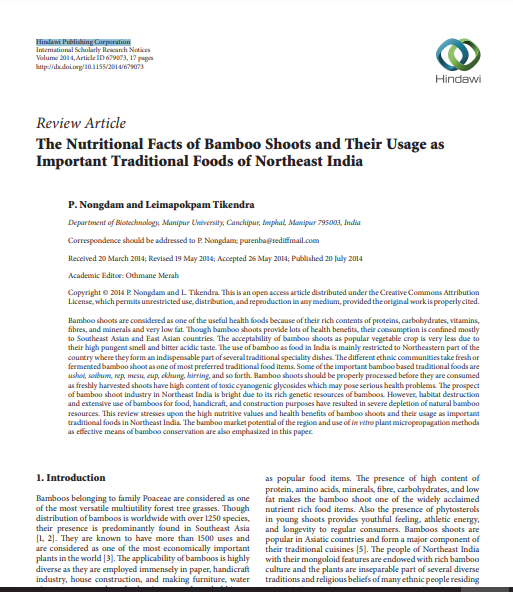
The Nutritional Facts of Bamboo Shoots and Their Usage as Important Traditional Foods of Northeast India
2014
Author(s): Nongdam P, Tikendra L
This review stresses upon the high nutritive values and health benefits of bamboo shoots and their usage as important traditional foods in Northeast India.
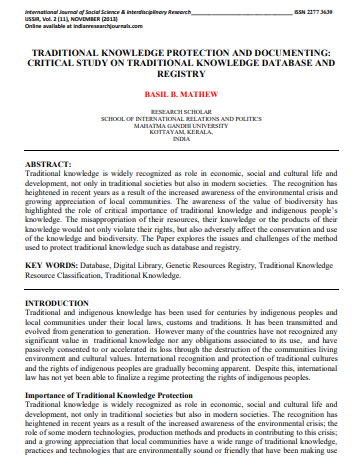
Traditional Knowledge Protection and Documenting: Critical Study on Traditional Knowledge Database and Registry
2013
Author(s): Mathew BB
The study explores the issues and challenges of the method used to protect traditional knowledge such as database and registry

Traditional Knowledge on Medicinal Plants Used in The Treatment of Respiratory Disorders in Bellary District, Karnataka, India
2013
Author(s): Murthy SMS, Vidyasagar GM
An ethnomedicinal survey was carried out in 16 different villages of Bellary district of Karnataka with an aim to document the information regarding indigenous plant species used in the treatment of respiratory disorders.
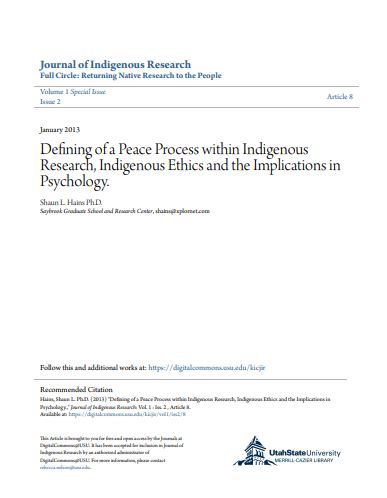
Defining of a Peace Process within Indigenous Research, Indigenous Ethics and the Implications in Psychology
2013
Author(s): Hains SL
This paper was prepared to outline how the work of peace can be a foundation for defining work in Indigenous Psychology.
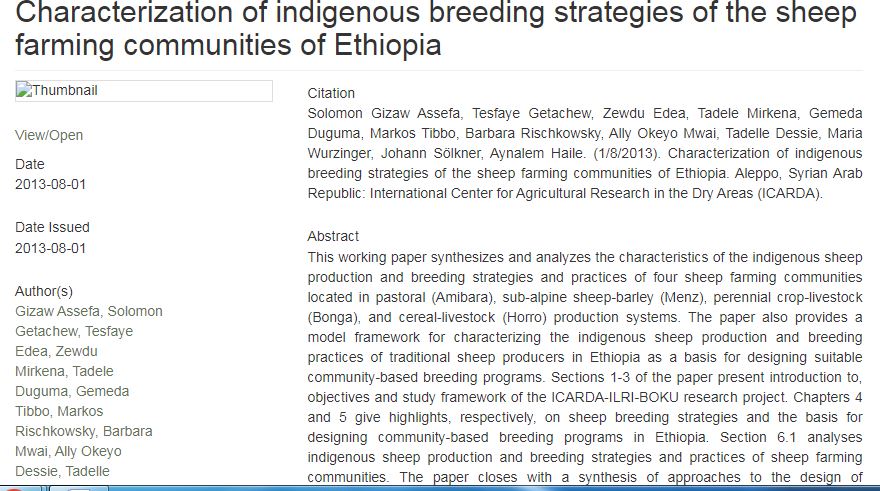
Characterization of Indigenous Breeding Strategies of the Sheep Farming Communities of Ethiopia
2013
Author(s): Assefa G, Getachew, Rischkowsky
This working paper synthesizes and analyzes the characteristics of the indigenous sheep production and breeding strategies and practices of four sheep farming communities located in pastoral (Amibara), sub-alpine sheep-barley (Menz), perennial crop-livestock (Bonga), and cereal-livestock (Horro) production systems.