


Training Materials
Partnering with Indigenous Peoples: Experiences and Practices
2013
Author(s): The Secretariat of the United Nations Permanent Forum on Indigenous Issues
This is not an exhaustive inventory of the experiences of the UN system. The case studies and projects profiled demonstrate how partnering with indigenous nations, peoples and communities is integral to the success of UN policies, programme and projects.

The Business Reference Guide to the UN Declaration on the Rights of Indigenous Peoples
2013
Author(s): UN Global Compact team
The objective of this guide (the “Guide”) is to help business understand, respect, and support the rights of indigenous peoples by illustrating how these rights are relevant to business activities
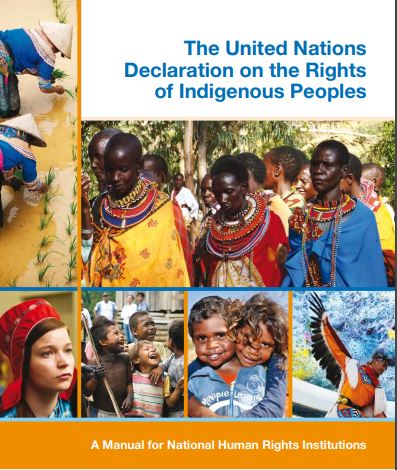
The United Nations Declaration on the Rights of Indigenous Peoples: A Manual for National Human Rights Institutions
2013
Author(s): Asia Pacific Forum of National Human Rights Institutions, Office of the United Nations High Commissioner for Human Rights
This Manual aims to support and strengthen the work of national human rights institutions (NHRIs) – whether they are human rights commissions or ombudsman offices – in the promotion, protection and enjoyment of the rights of indigenous peoples, especially NHRIs that are established in accordance with the Paris Principles.
Handbook for ILO Tripartite Constituents: Understanding the Indigenous and Tribal Peoples Convention,1989 (No.169)
2013
Author(s): International Labour Organization
This handbook aims to answer some of the essential questions of ILO constituents regarding the Indigenous and Tribal Peoples Convention, 1989 (No. 169).
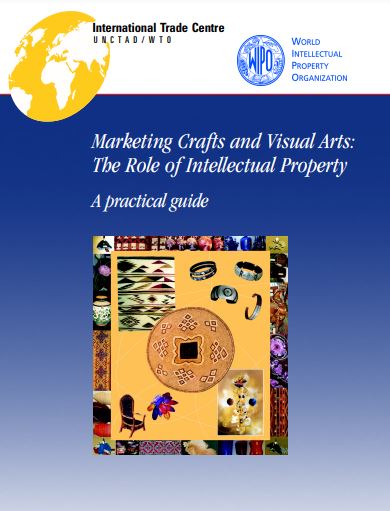
Marketing Crafts and Visual Arts: the Role of Intellectual Property
2013
Author(s): Ballyn J, Castro JD, Verbauwhede L
The basic purpose of this guide is to empower an artisan, craft entrepreneur or visual artist to develop a meaningful framework and business perspective on marketing and on the role of IP in marketing, and to pose the right questions.

The World Intellectual Property Organization Traditional Knowledge Documentation Toolkit
2012
Author(s): Aguirre BV, Wendland W, Jiao F, Toki K , Bhatt S
This WIPO Traditional Knowledge Documentation Toolkit provides useful practical guidance on how to undertake a TK documentation exercise as a process and how to address critical IP related issues and questions, as they surface during this effort.

UNAIDS Guidance for Partnerships With Civil Society, Including People Living With HIV and Key Populations
2012
Author(s): Joint United Nations Programme on HIV/AIDS
This guidance responds to calls from partners that meaningful engagement with civil society including indigenous populations be incorporated into all areas of the Joint Programme’s work and that essential principles of engagement be reflected within the UBRAF and other key UNAIDS strategic, programming and budgeting documents.

Securing Land Rights for Indigenous Peoples in Cities
2011
Author(s): United Nations Human Settlement Programme (UN-HABITAT)
The report provides an overview of the challenges facing Indigenous peoples in cities, with particular attention to the unique challenges facing Indigenous women, children and youth, people with disabilities, elders and sexual minorities.
Training Module on Indigeneous Peoples’ Issues
2010
Author(s): The Secretariat of the United Nations Permanent Forum on Indigenous Issues
This section of the training module tries to capture some short key messages from agreed UN policy documents, which are intended to guide UN staff members during the planning and implementation of development processes. Adherence to this guidance should ultimately result in the improved recognition of indigenous peoples’ rights at the national level, putting policy into practice.
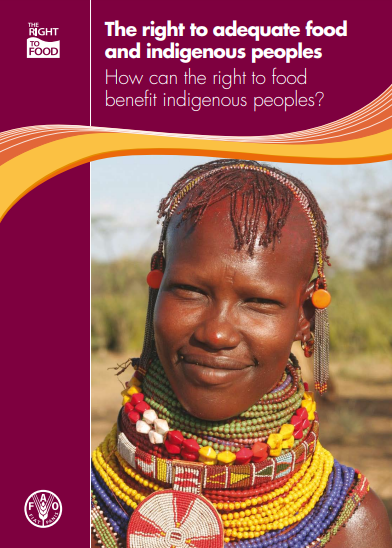
The Right to Adequate Food and Indigenous People
2009
Author(s): Knuth L (FAO Right to Food Team)
The paper also focuses on the analysis of the right to food from an indigenous peoples’ perspective and addresses the main issues of concern to indigenous peoples that crosscut the right to food - including access to natural resources, intellectual property rights and the environment.