


Training Materials
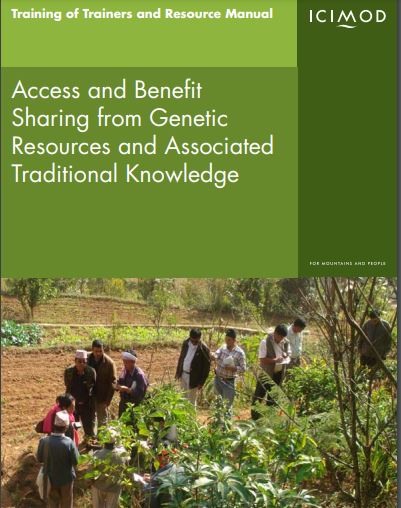
Access and Benefit Sharing from Genetic Resources and Associated Traditional Knowledge; Training for Trainers and Resource Manual
2009
Author(s): Oli KP, Dhakal TD
This manual provides the materials needed to deliver a basic training in access and benefit sharing (ABS) of genetic resources and associated traditional knowledge as provided for under the Convention on Biological Diversity.

Resource Kit on Indigenous People' Issues
2008
Author(s): Secretariat of the United Nations Permanent Forum on Indigenous Issues/DSPD/DESA
One of the objectives of this Kit is to provide elements to help the UNCTs understand the language specific to indigenous peoples in the CCA/UNDAF Guidelines, thereby facilitating their implementation. An additional purpose is to support UNCTs in the “roll-out” of the UNDG Guidelines on Indigenous Peoples’ Issues. Finally, this Resource Kit also supports the efforts of the Permanent Forum in promoting the implementation of its mandate at the country level.

Reef and Rainforest Environmental Encyclopedia of Marovo Lagoon, Solomon Islands
2005
Author(s): United Nations Educational, Scientific and Cultural Organization
The bilingual publication: Reef and Rainforest: an Environmental Encyclopedia of Morovo Lagoon, Solomon Islands, proposes a voyage of discovery into the lives of the Marovo people. Written first and foremost for the use of the Marovo people, many wise elders of the villages and other local experts on reef and rainforest provided, checked, verified and expanded the names and stories contained in this encyclopedia. Available as a book and as a wiki, the project is a practical demonstration of how educational material in vernacular language fosters transmission and development of indigenous environmental knowledge across generations.
International Workshop on Traditional Knowledge
2005
Author(s): UNEP and Traditional Knowledge
UNEP is currently working towards the enhancement of civil society engagement in general within the organisation as well as the intergovernmental processes. As an important first step to improve and support the participation of IPOs in the Governing Council of UNEP as well as the preceding Global Civil Society Forum is to encourage IPOs to become accredited to UNEP.
Guidelines for Inclusion: Ensuring Access to Education for All,
2005
Author(s): Wisbey M
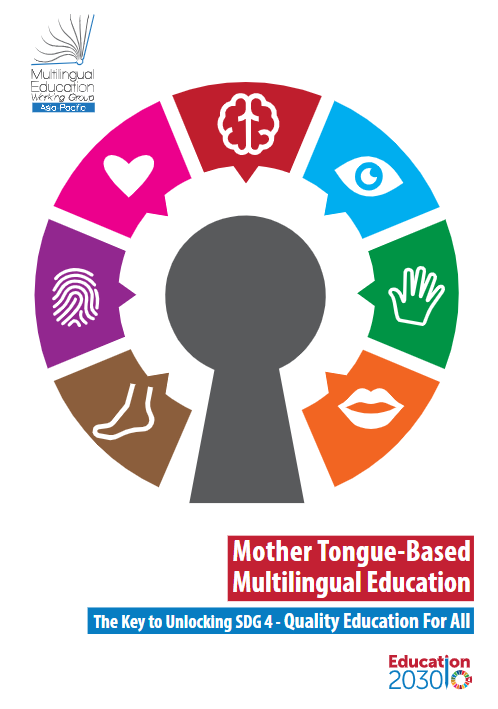
This study shows that SDG 4 is so foundational to the other Sustainable Development Goals, without mother tongue-based multilingual education the other 16 goals will remain unachievable.

Voluntary Guidelines to Support the Progressive Realization of the Right to Adequate Food In the Context of National Food Security
2005
Author(s): Food and Agriculture Organization of the United Nations
The Right to Food Guidelines address a range of activities that States should ideally undertake in order to realise the human right to adequate food. The Guidelines anticipated the urgency to address today's most pressing global challenges, which requires to be overcome by leaving no one behind. They have influenced the global agenda to eradicate hunger and malnutrition over the past 15 years and are still relevant to today’s global efforts for achieving the SDGs.

ILO Convention on Indigenous and Tribal Peoples, 1989 (No. 169): a manual
2003
Author(s): Schielmann S, Thornberry F,
The publication provides an overview of the ILO Convention No.169 which is the foremost international legal instrument that deals specifically with the rights of indigenous and tribal peoples, and whose influence extends beyond the number of actual ratifications.

Draft Outline Of An Intellectual Property Management Toolkit For Documentation Of Traditional Knowledge
2002
Author(s): Secretariat
As traditional communities evolve under increasing external pressures and influences, and the customary frameworks for preserving and transmitting their TK come under strain, there is a potential role for alternative, often more formal, methods of recording and preserving TK. Documentation of TK and associated biological or genetic resources is potentially useful for a range of reasons, in the interests of both TK holders, and the broader public interest.

Guidelines on Indigeneous Peoples’ Issues
2000
Author(s): Team of the Inter-Agency Support Group on Indigenous Issues (IASG)
The purpose of the Guidelines is to assist the United Nations system to mainstream and integrate indigenous peoples’ issues in processes for operational activities and programme at the country level. The Guidelines set out the broad normative, policy and operational framework for implementing a human rights-based and culturally sensitive approach to development for and with indigenous peoples
Manual on Functional Literacy for Indigenous Peoples
1999
Author(s): UNESCO Principal Regional Ofice for Asia and the Pacific.
Definitions of literacy have also included the recognition of numbers and basic mathematical signs and symbols within texts. This skill used to be called numeraq. In practice, however, people need to understand and use mathematical skills in a range of contexts, in a similar way to their reading and writing skills. Simple recognition of signs and symbols has given way to a broader definition of numeracy that includes using an understanding of mathematics as a tool to make a particular sense of the world.