


Reports

Globally Important Agricultural Heritage Systems (GIAHS). Combining Agricultural Biodiversity, Resilient Ecosystems, Traditional Farming Practices and Cultural Identity
2018
Author(s): Food and Agriculture Organization of the United Nations (FAO)
Traditional agricultural systems are extremely important for sustaining livelihoods,maintaining rural communities,preserving knowledge,and protecting fragile landscapes and agrobiodiversity. This knowledge offers examples of high resilience and precious agroecological techniques that can help agriculture adapt to ever-changing social, environmental and economic conditions.

Regional Consultation of Asia and the Pacific on the Implementation of Indigenous Peoples & Peasants’ Rights to Plant Genetic Resources for Food & Agriculture
2018
Author(s): International Planning Committee for Food Sovereignty
In this document, ‘farmers’ includes those who produce and/or use seeds in both industrial and cultural seed systems in line with Article 9 on Farmers’ Rights in the Seed Treaty. The custodians of cultural seed systems are referred to as ‘indigenous peoples and peasants’, and more broadly also include smallholders, artisanal fisherfolk, pastoralists, forest dwellers, women and all the communities that produce food in agroecological ways and contribute to maintaining biodiversity.
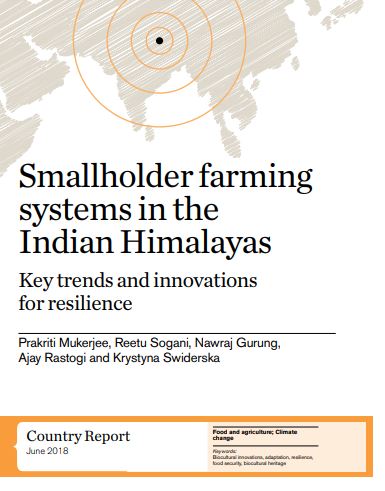
Smallholder farming systems in the Indian Himalayas: key trends and innovations for resilience
2018
Author(s): Mukerjee P, Sogani R, Gurung N, Rastogi A, Swiderska K
Traditional farmers in the Central and Eastern Indian Himalayas have observed significant climatic changes in recent years, reducing agricultural productivity. They have responded by innovating to increase resilience and yields, using traditional knowledge, biodiversity and external knowledge. This report explores key trends in livelihoods, food security, crop diversity and biocultural heritage across ten communities; the biocultural innovations developed in response to climatic and socioeconomic changes; and the social factors that have supported biocultural innovation.
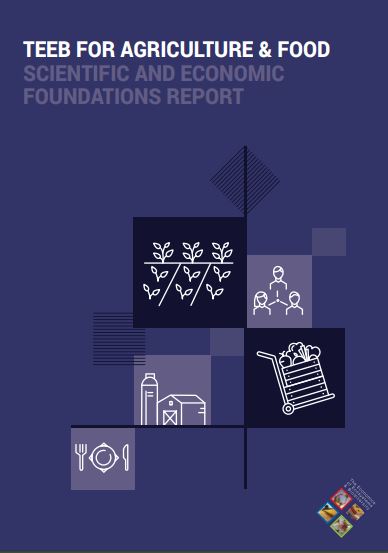
TEEB for agriculture & food: scientific and economic foundations
2018
Author(s): The Economics of Ecosystems and Biodiversity (TEEB) Office, UN Environment
The TEEBAgriFood ‘Scientific and Economic Foundations’ report addresses the core theoretical issues and controversies underpinning the evaluation of the nexus between the agri-food sector, biodiversity and ecosystem services and externalities including human health impacts from agriculture on a global scale. It argues the need for a 'systems thinking' approach, draws out issues related to health, nutrition, equity and livelihoods, presents a Framework for evaluation and describes how it can be applied, and identifies theories and pathways for transformational change.

Globally Important Agricultural Heritage Systems (GIAHS). Combining agricultural biodiversity, resilient ecosystems, traditional farming practices and cultural identity
2018
Author(s): Food and Agriculture Organization of the United Nations
The report summarises GIAHS Programme initiated by FAO through multi-stakeholder support, this approach aims to: provide technical assistance; boost understanding of the value of keeping alive sustainable agricultural knowledge; and promote agricultural products, agro-tourism and other incentive mechanisms and market opportunities.

Support to traditional healers for strengthening and capacity building
2017
Author(s): Bio-Resources Development Centre
This study provides profile of traditional healers in Meghalaya state. It also identifies constraints and problems of traditional healers.

Indigenous peoples have begun a re-conceptualization of educational processes, emphasizing indigenous languages, spiritual beliefs, values, community involvement and connection to land, territories and resources. However, the process of achieving systemic change in education-related legislation and governance, human resources, curricula, materials and assessment, based on indigenous goals and aspirations, requires time, effort and resources. Hence, there is a critical need both for national and international support and for capacity-building to ensure that academics and professionals, especially among indigenous peoples, can act as leaders in effecting this significant paradigm shift.
Framework for Integrated Ecosystem Management in the Hindu Kush Himalaya
2017
Author(s): Yi S, Rawat GS, Wu N, Bubb P, Chettri N, Kotru R, Sharma E, Bhatta LD, Bisht N, Aryal K, Gurung J, Joshi S, Adhikari BS, Rawal RS, Ghate R, Gurung K, Goodrich C G, Chitale VS, Shakya B, Ismail M, Chaudhary RP, Yan Z, Wang J
The report provides basic background, principles and key terms for ecosystem management, major considerations in the context of the HKH and the process and practical steps required for the management of ecosystems.
Handbook on Intellectual Property Rights & Technology Transfer
2017
Author(s): Indian Council of Medical Research (ICMR)
This booklet gives a broad overview of all the important concepts of IPRs with essential information for a busy scientist as to how to file a patent. This document is based on relevant techno-legal information from various national and international sources.

Facilitating BioTrade in a challenging access and benefit sharing environment
2016
Author(s): United Nations Conference on Trade and Development
This scoping study offers an overview of some of the key issues and connections between BioTrade and ABS under the framework of the Nagoya Protocol, the challenges faced by interested actors and suggestions of ways to address them, including in terms of interpretation, implementing policies and legal reforms. Examples, figures and case studies are used to clarify some of the points raised and suggestions on the way forward.